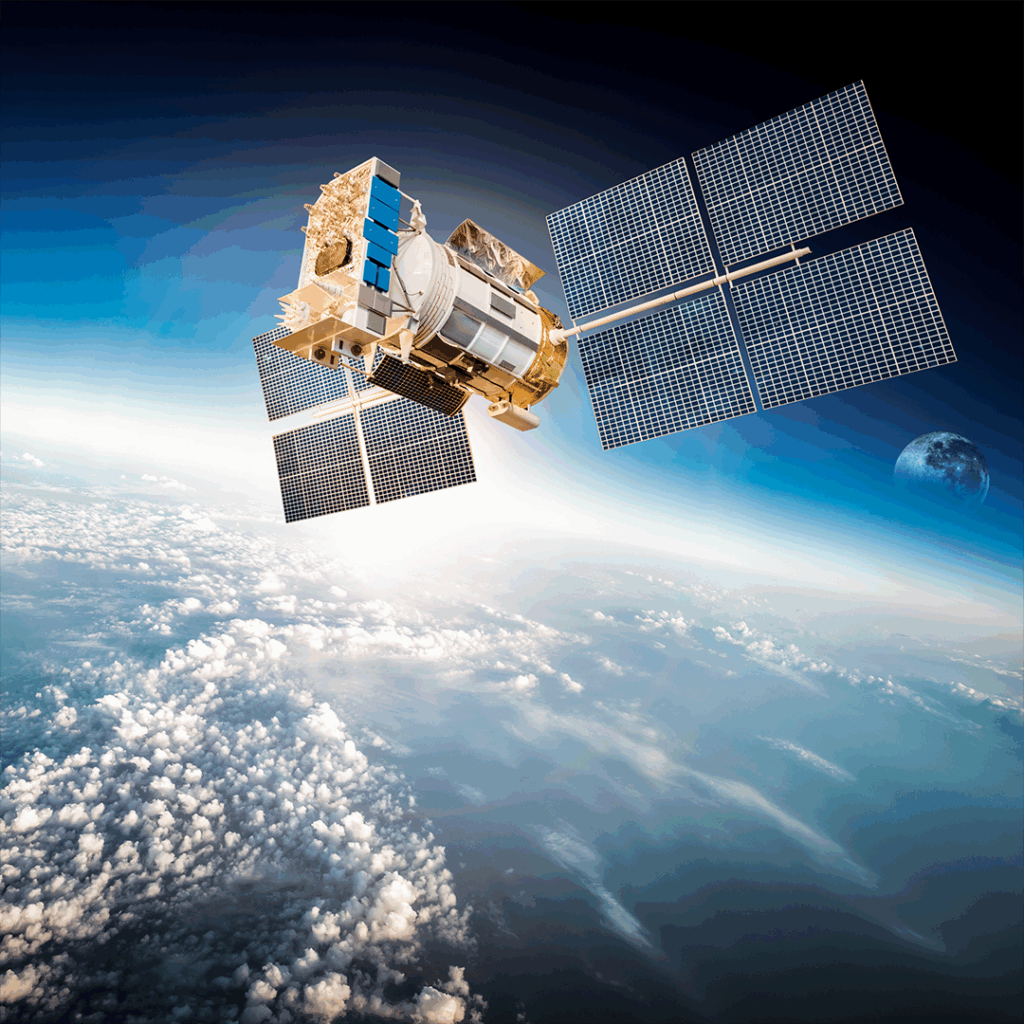
Space technology is undergoing a significant transformation. Alongside traditional satellites designed to operate in orbit for 10–20 years, so-called New Space solutions have emerged. These systems are typically designed for shorter lifetimes and faster development cycles. While the approach has changed, the space environment itself has not—and it continues to impose demanding requirements on RF filter solutions.
For Creowave Filters, New Space represents a natural extension of existing RF expertise combined with a deep understanding of space-application requirements.
Background of the New Space evolution
The acceleration of New Space development can be traced particularly to the 2010s, when new commercial players and technologies entered the space sector. During this period, SpaceX began its commercial operations, fundamentally changing perceptions of access to orbit.
At the same time, the widespread adoption of the CubeSat standard enabled small, lightweight satellite modules. This lowered the barrier to entry for many organizations and shifted satellite development away from single, long-lived systems toward larger, more agile system architectures.
On the application side of New Space, the Finnish company ICEYE serves as a strong example, utilizing shorter-lifetime satellites as part of a broader, system-level approach.
Traditional space and New Space – different starting points, same environment
In traditional space technology, the design philosophy is built around extreme reliability. Once a system is launched, it must operate flawlessly for decades without maintenance. This approach reflects the well-known NASA principle that “Failure is Not an Option.”
In contrast, New Space solutions typically involve significantly shorter satellite lifetimes. They often operate in lower orbits and as part of larger constellations, where the role of an individual satellite is more limited. This enables a more flexible design philosophy, in which requirements are defined according to mission lifetime and application needs rather than maximum theoretical durability.
Despite these differences, both approaches operate in the same physical environment.
Declining launch costs reshape system design
Reduced launch costs are one of the key drivers behind New Space. As access to space becomes more affordable, the overall economics of satellite systems change.
This shift supports faster development cycles, shorter delivery timelines, and more scalable system architectures, enabling New Space projects to move from concept to deployment more efficiently.
RF filter solutions in New Space applications
RF filters are a critical part of satellite communication systems. They ensure controlled, interference-free signal behavior even in complex RF environments. In New Space applications, RF filter design often emphasizes modularity and ease of integration: the filter is a clearly defined unit that can be integrated into the satellite without extensive system-level customization.
From Creowave Filters’ perspective, this approach enables faster development cycles and a clearer project scope compared to traditional space programs, where components are tightly coupled to large, long-term system developments. In practice, this translates into shorter delivery times and improved predictability in project execution.
Testing: at least at the level of traditional space technology
Although New Space allows greater flexibility in requirements, testing rigor is not reduced. RF filter solutions undergo at least the same fundamental measurements as traditional space products. Typical testing includes RF performance verification in the space environment, on the other words, functionality across the operational temperature in vacuum. In particular, satellite launch exposes satellite components, including filters, to extreme vibrations. Hence, filters go thru rigorous vibration and shock tests during the validation phase.
In many New Space projects, testing is performed as part of a larger integrated system, such as with the filter already installed in the satellite. This reduces redundant testing while ensuring that RF performance meets system requirements across the full operating range.
Materials, traceability, and weight are critical
In New Space applications, material selection and traceability are critical. All materials used must be approved, documented, and compatible with customer requirements. The need for clear and accurate documentation is emphasized by faster development cycles and tighter integration between suppliers and system integrators. Errors in material selection or documentation can result in costly re-testing or late-stage project delays.
Weight is another key factor. Every kilogram launched into orbit impacts system design, highlighting the importance of lightweight and carefully optimized RF solutions.
End-to-end readiness for New Space solutions
Success in New Space applications requires seamless interaction between design, manufacturing, and testing. At Creowave Filters, all key capabilities required to deliver RF filter solutions are available within a single, integrated framework—from design through measurement to production.
In addition, expertise and test capacity available at the DA-Group level enable the fulfillment of demanding space-application requirements without reliance on multiple external parties. This reduces project risk and supports the controlled transition of solutions into operational use.
Creowave Filters in the New Space market
Creowave Filters is well positioned to address the requirements of New Space solutions through established RF expertise, advanced measurement capability, and processes aligned with space-application standards. As a European supplier, Creowave Filters offers a reliable and transparent partnership in a rapidly growing market.
New Space continues to evolve—and with it, Creowave Filters’ RF filter solutions that enable reliable communication in space.